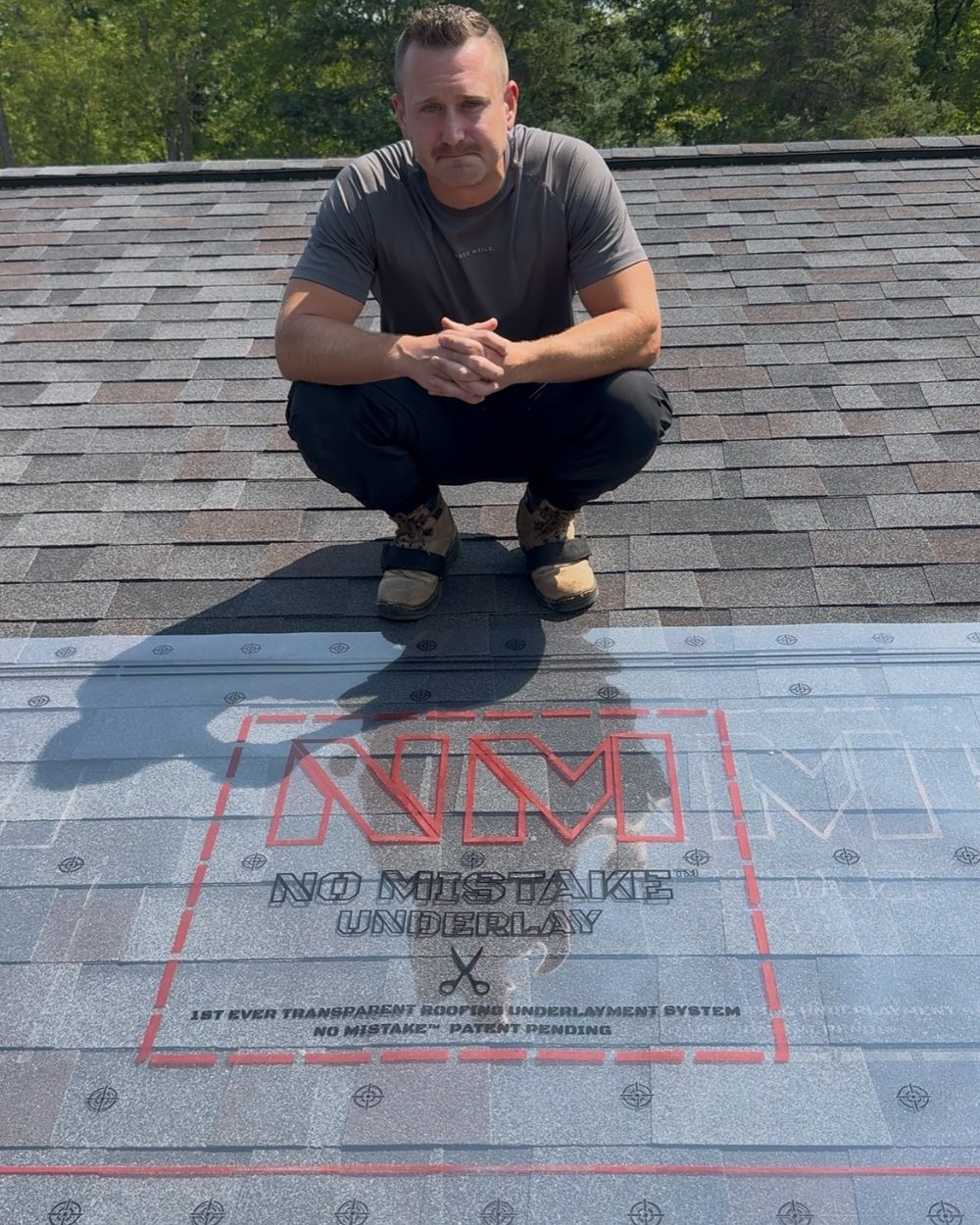
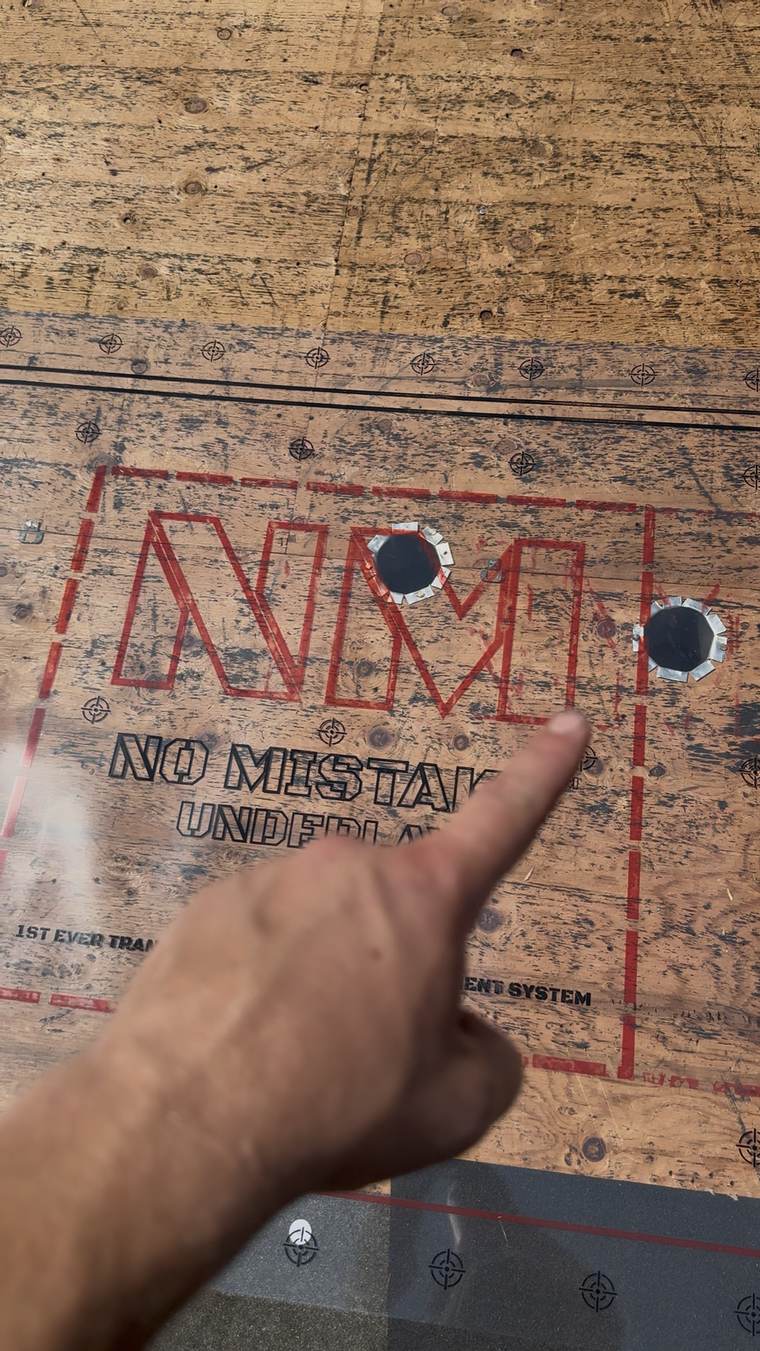
A transparent roofing underlayment. The decking, vent holes and penetrations stay visible after the felt is down — nothing to mark, nothing to wash away, and no climbing into the attic to find a vent.
It doesn’t exist yet, and I’m not selling you anything. I’m collecting proof that roofers want this so a manufacturer will build it.
Roofing is about as hard as work gets. Steep, high up, cut-up slopes, and all of it physical. It’s hot, it’s loud, and crews move quick because they have to — plenty of days you’re running more than one job at a time.
Once the felt is rolled out, everything under it disappears — a vent hole, a soft spot in the decking, the section somebody flagged to replace. On a multi-day build you don’t want to cut a vent open with weather coming, so it stays buried. The next person up the ladder has no way of knowing any of it is there.
The fix has always been workarounds. Chalk it. Spray a circle. Take photos and dig back through them later.
Every one of those depends on somebody remembering. And every one of them washes off, scuffs out, or wears down before you get back to it.
Property protection, catch-all and tarping systems, keeping the site clean and safe — that all takes attention, and it’s attention well spent. But a project manager can be doing everything right on the ground and still have a vent getting covered up top.
Most of the time somebody catches the miss. But not everybody takes before photos, and not everybody stops to double-check. When it slips through, somebody is crawling the attic to find the vent — or driving back out to a roof that was already finished.
If you own the company, that’s one less thing to babysit and one less thing to hope your project manager catches.
Covered vent — 01
Bathroom exhaust
The fan keeps running. That wet air has nowhere to go, so it condenses on the underside of the deck. In winter that moisture builds up as frost, then drips the first time things warm up — and looks exactly like a leak. Longer term it’s staining, mold and rot.
Covered vent — 02
Dryer exhaust
Same problem, plus heat and lint. Block the outlet and lint packs into the duct instead of leaving the building. Lint is one of the most common materials first ignited in dryer fires. That’s a liability you don’t want attached to your company.
Even when it’s caught
The callback
Somebody drives back out, locates where the vent should have been, cuts it in and installs it. Then explains to the homeowner why it got missed in the first place. Reputation is everything in this business, and callbacks are the fastest way to spend it.
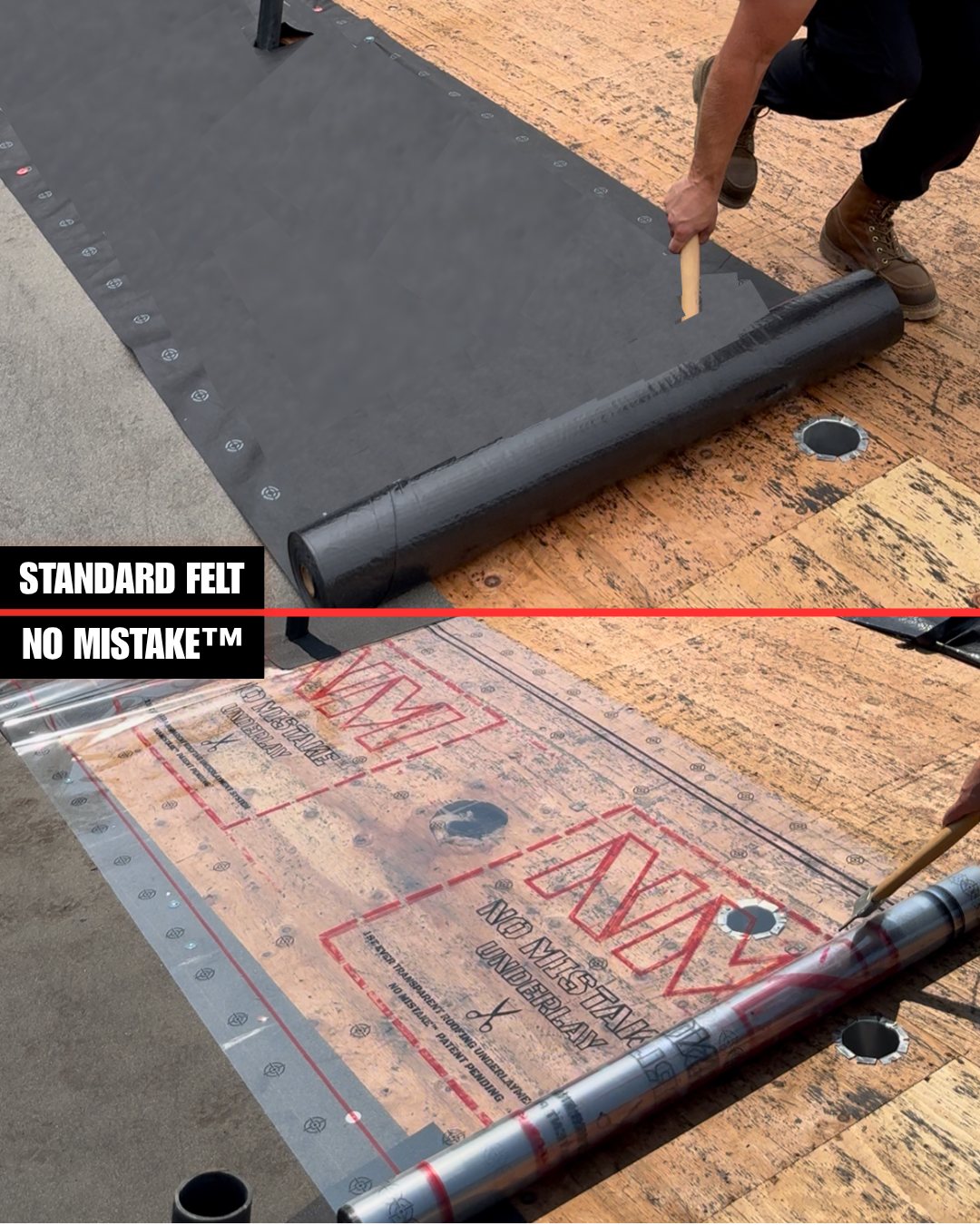
Standard felt over three vent holes. The NO MISTAKE mockup over the same three.Roofer’s view. A faded mark on felt is easy to miss at pace. Under the NO MISTAKE mockup, the opening stays in plain sight.
The fix
If you can see it, you can’t miss it
Here’s what changes when the underlayment is clear. Nothing else about the install does — it just makes the day easier and protects you.
01
Every penetration stays in view
Vent holes, pipe penetrations and the decking itself stay visible after the felt is down. Cut where you need to cut and keep moving.
02
Dry it in tight. Cut it later.
Leave it uncut over an opening and the roof stays tight overnight. Come back after the rain and the opening is still right there. You can leave felt uncut too — you’re just hoping the mark survives the rain and somebody spots it.
03
Bad decking doesn’t disappear
Rot, soft spots, delamination, gaps too wide to nail. Your crew can see them instead of nailing blind. So can an inspector or an adjuster, without pulling anything up.
04
Nothing to wash off
No chalk. No spray paint. The deck is the marking.
05
Printed overlap lines
Course and overlap lines printed right on the roll, the same way your synthetic has them now.
06
Nothing else changes
Same roll, same cap nails, same courses, same pace. Shingles, metal, tile. Nothing new for a crew to learn.
What it would look like
Mocked up, not manufactured
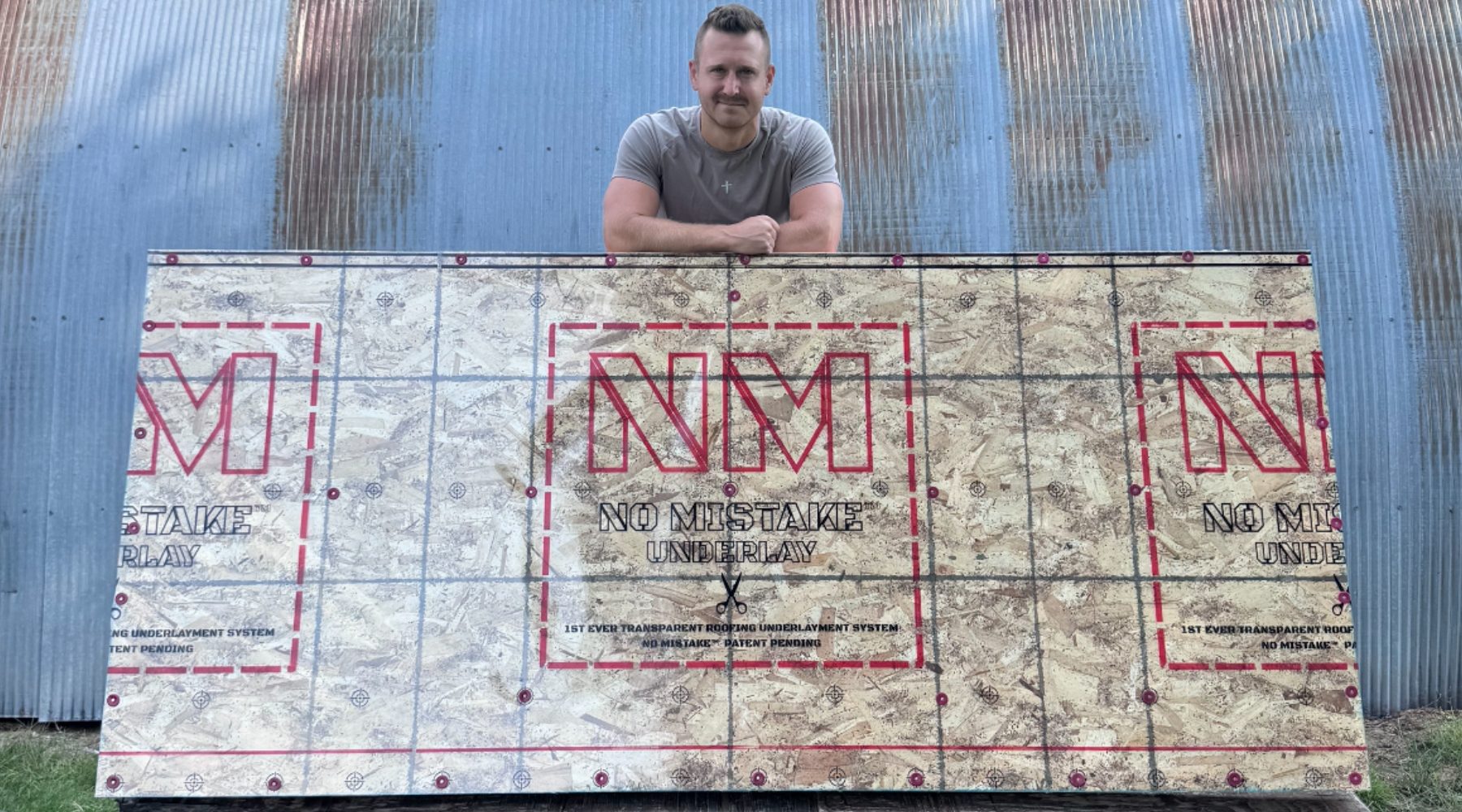
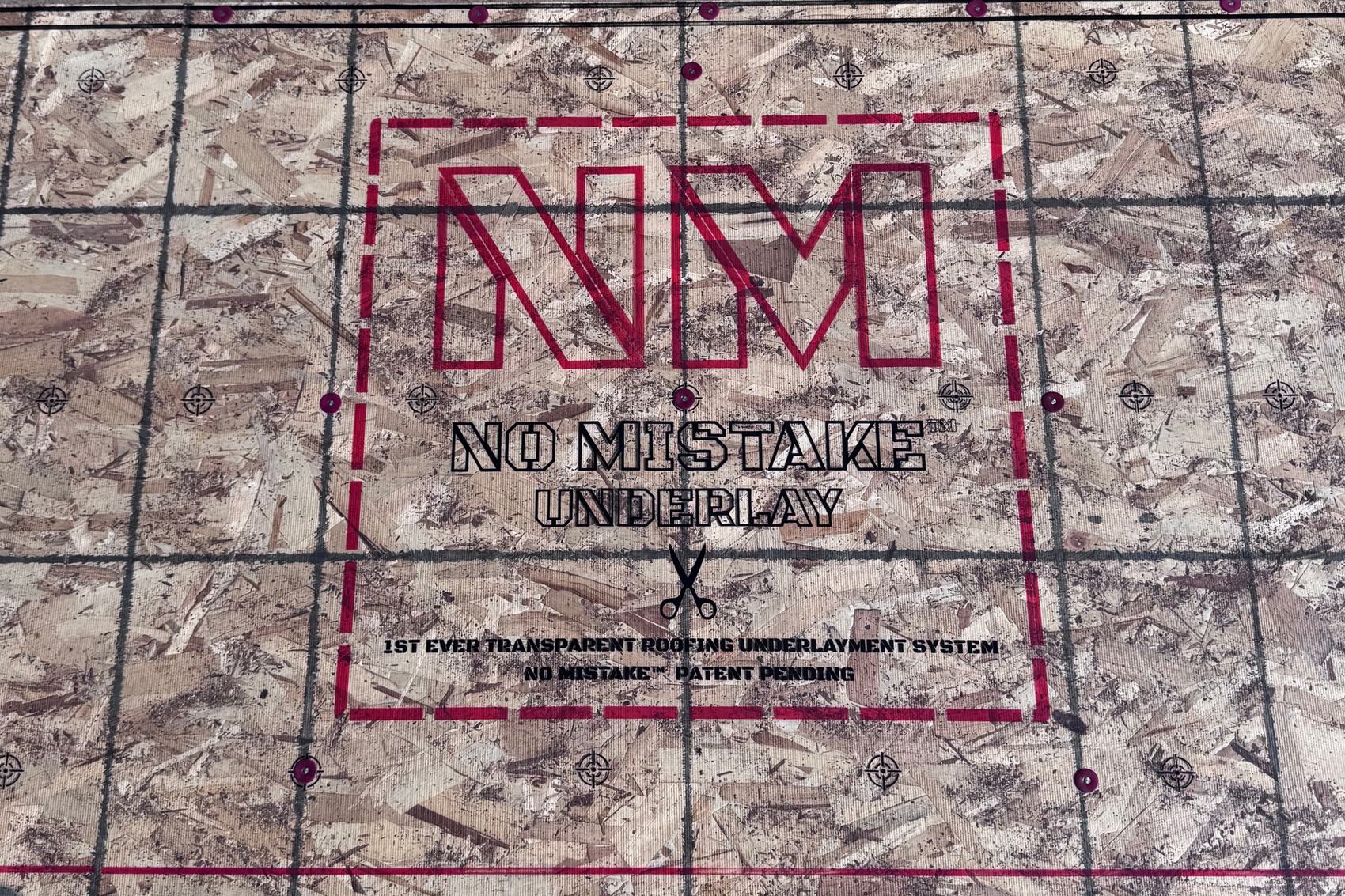
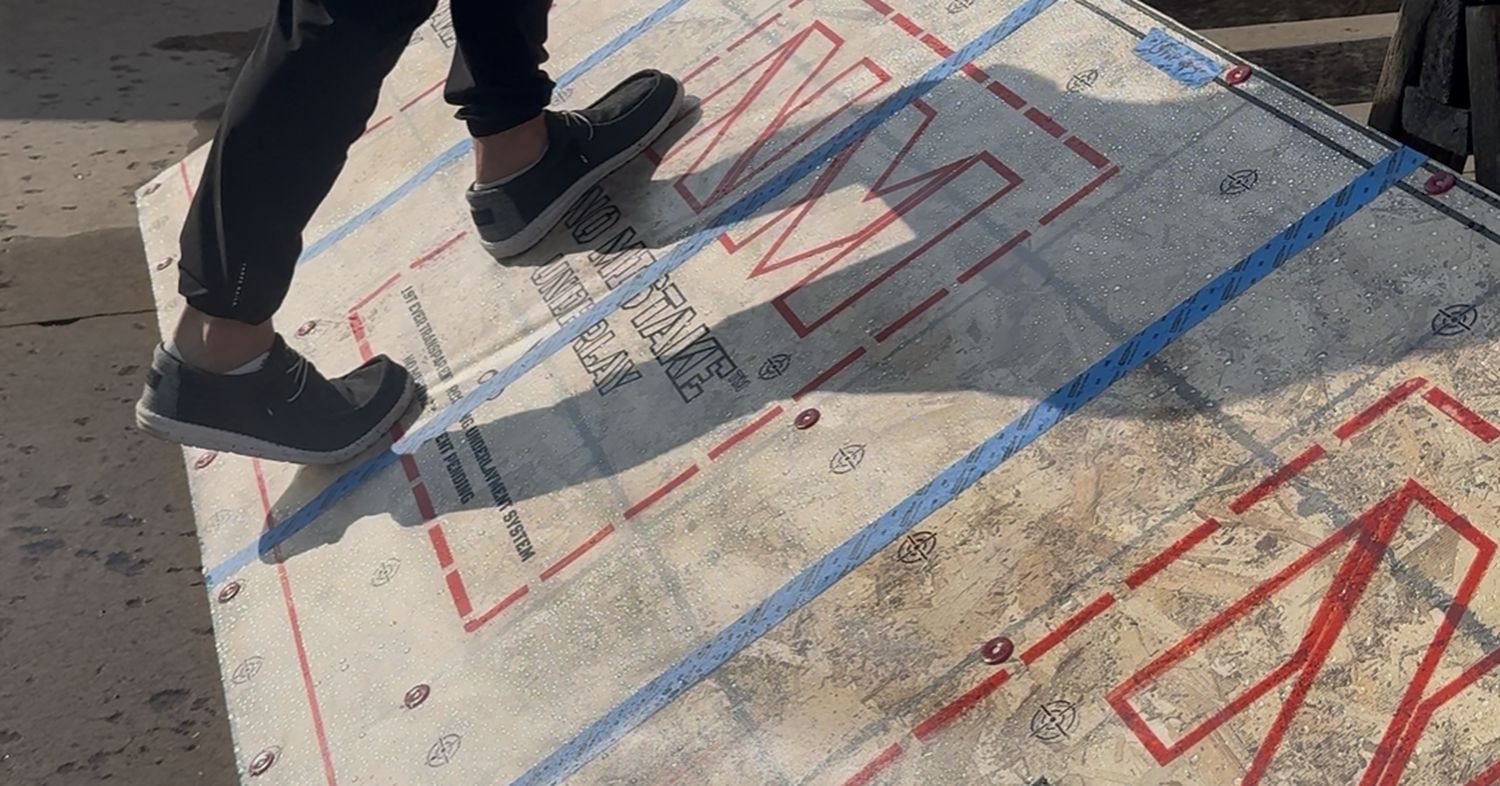
Straight up about what you’re seeing: clear poly printed with my logo and pattern. Some of it over a decking panel I put together, some of it on a real roof. A stand-in, not a manufactured product — so you can see the idea instead of just hearing it.
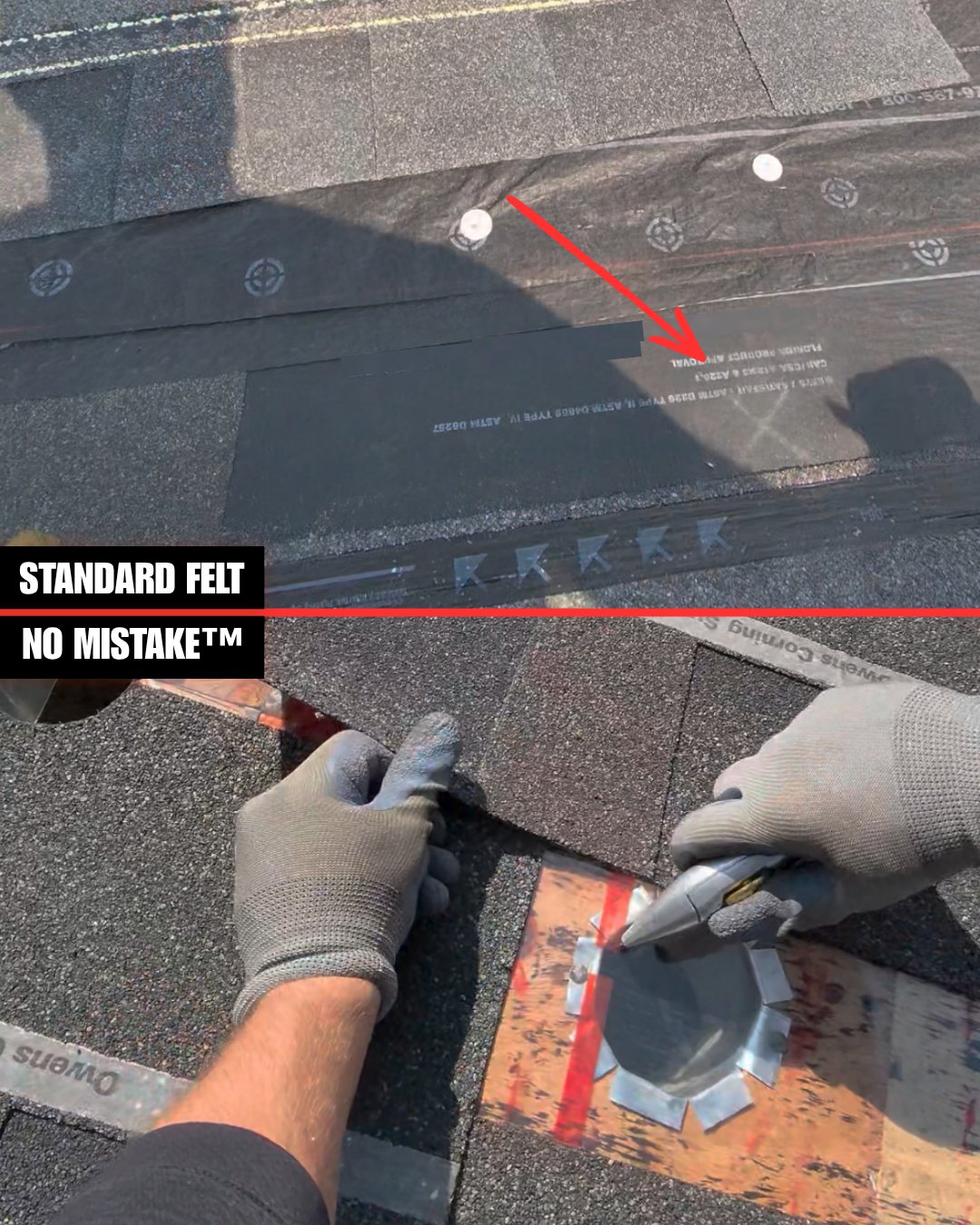
The mockup over OSB. Seams, nails and board joints all read through.Easier for the crew, less stress for the owner, better for the customer. Striving for no mistakes.Two vent openings, in plain sight, with the roll already over them.
From the inventor
My name is Evan. I’ve spent about ten years in roofing.
I’ve worked the crew side and the project management side. Both taught me the same thing: this trade has to move fast. Weather windows, crew schedules, homeowners who want it finished today or before the next storm rolls in.
Good people working under that kind of pressure still make mistakes. That isn’t carelessness — that’s the job, and every one of us has made one.
But this one is preventable. We cover a deck with a roll of felt, then ask a crew to remember what’s underneath it. Why not take that off the table?
So I asked why underlayment is opaque in the first place. It’s sunlight — black pigment protects the film from UV before the shingles go on. That same pigment is a big part of why you can’t see through it. Get the UV protection from clear stabilizers instead, and the felt should do the same job while the deck stays visible. That’s what the patent application covers.
Here’s exactly where this stands. I haven’t manufactured anything. What’s in the photos above is clear poly with my logo and pattern printed on it. The application is filed and patent pending. What I don’t have is a factory.
That’s why this page exists. Your name on that list is what I take to a manufacturer — a real number instead of my own opinion.
If enough of us say we’d use it, somebody will help me build it. If that’s you, add your name.
Evan Suonvieri
Inventor · No Mistake™ Underlay
Sign up
Tell me you’d use it
I’m not asking you to buy anything. Easier on the crew, fewer callbacks on the owner, a better roof for the customer. If you’d use it, say so — that’s the only thing that gets it built.
Seven questions, about a minute. One roofer is an opinion. A few hundred is a market.
I’ll let you know
Thanks — that’s one more name I can put in front of a manufacturer. If you ticked the updates box I’ll send word as this moves along. If not, you’ll hear from me when it’s available.
Traction
Is it slippery?
It’s a fair question, and one I get asked. Clear doesn’t have to mean slick.
I built a pitched test panel, ran four different surface textures across the mockup, soaked all of it with water and walked it. Wet, on a slope, in ordinary shoes. I ran it to see whether traction was possible on a clear film at all — not to prove a number. That’s a manufacturer’s job with a real product.
Traction is a spec, not an afterthought. Whatever gets manufactured has to hold a boot at least as well as the synthetic you’re running now.
Four surface textures, hosed down, on a pitched panel.
Questions
What will it cost?
I don’t know yet. Clear film isn’t the same to make as black, and the real number comes out of the manufacturing conversation — that’s still ahead of me, along with more R&D.
Does it void the warranty on the shingles I install?
Possibly. System warranties usually want the manufacturer’s own components, so it depends entirely on which shingle manufacturer jumps on it.
If your rep hasn’t heard about this, send it to them. Theirs might be the brand that adds it to the line-up — and if it’s their product on the roof, it stops being a warranty question.
Will it hold up to the sun before the shingles go on?
I haven’t run that test, and I’m not going to pretend otherwise. What I can tell you is that clear and UV-stable aren’t opposites. Greenhouse film is see-through and gets warranted for four years outdoors — but only because UV stabilizers are built into the resin. Untreated poly goes brittle in a season.
So it’s a formulation question, and it’s one a manufacturer answers with real testing. Meeting the exposure rating you’d expect from a synthetic is on whoever builds this.